
Sourdough Tools
what you need and what you can get away without having

This post contains affiliate links - please see our disclosure.
If you’ve started your sourdough journey, or plan to start it soon, you’ve most likely been doing some research (try to avoid the sourdough “rabbit hole.” If you’ve felt overwhelmed by which tools/equipment you should and shouldn’t invest in, then this post is for you.
Before you rush off and buy every tool you’ve seen on the internet because you think they will help you bake that perfect loaf of sourdough… listen up, most of these tools are not necessary at all. I will kindly remind you that sourdough bread has been around for over 5,000 years, and I highly doubt they had a lot of gizmos and gadgets back then. :)
Honestly, you may already have a lot of the tools you need to get started: a glass jar, water and flour. Oh, and something to stir it with - a spoon or spatula will work just fine! And the process of making a starter usually takes 7-14 days, so while you wait for that, you can do a little more research and investigate what you might already have in your house/kitchen.
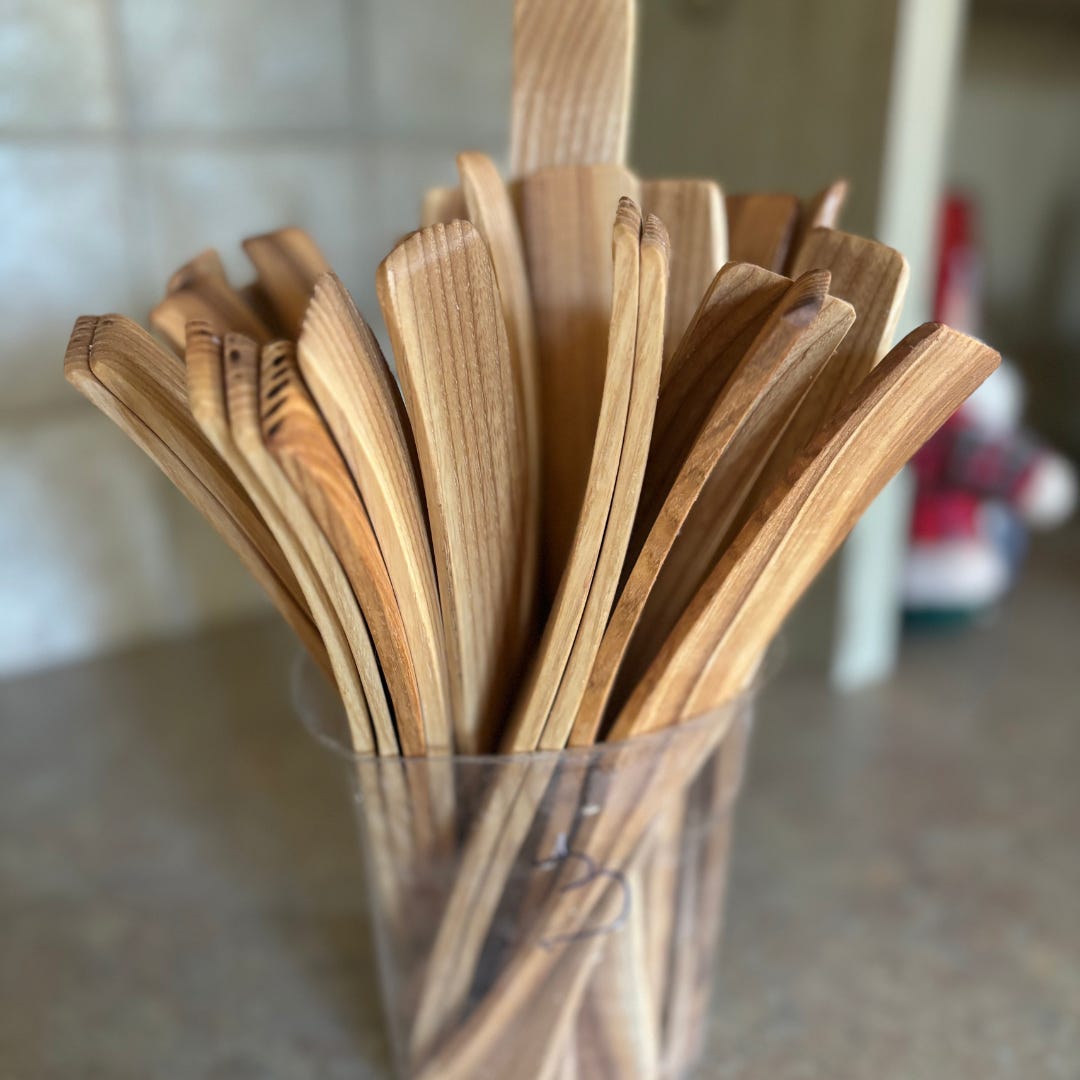


Sourdough bread typically includes 6 phases: mixing the dough, bulk fermentation, shaping, cold proofing, scoring and of course, baking, so in this article we will take a look at each phase and what you need for each, plus the best places to get each tool.
Remember, this is all based on personal experience…
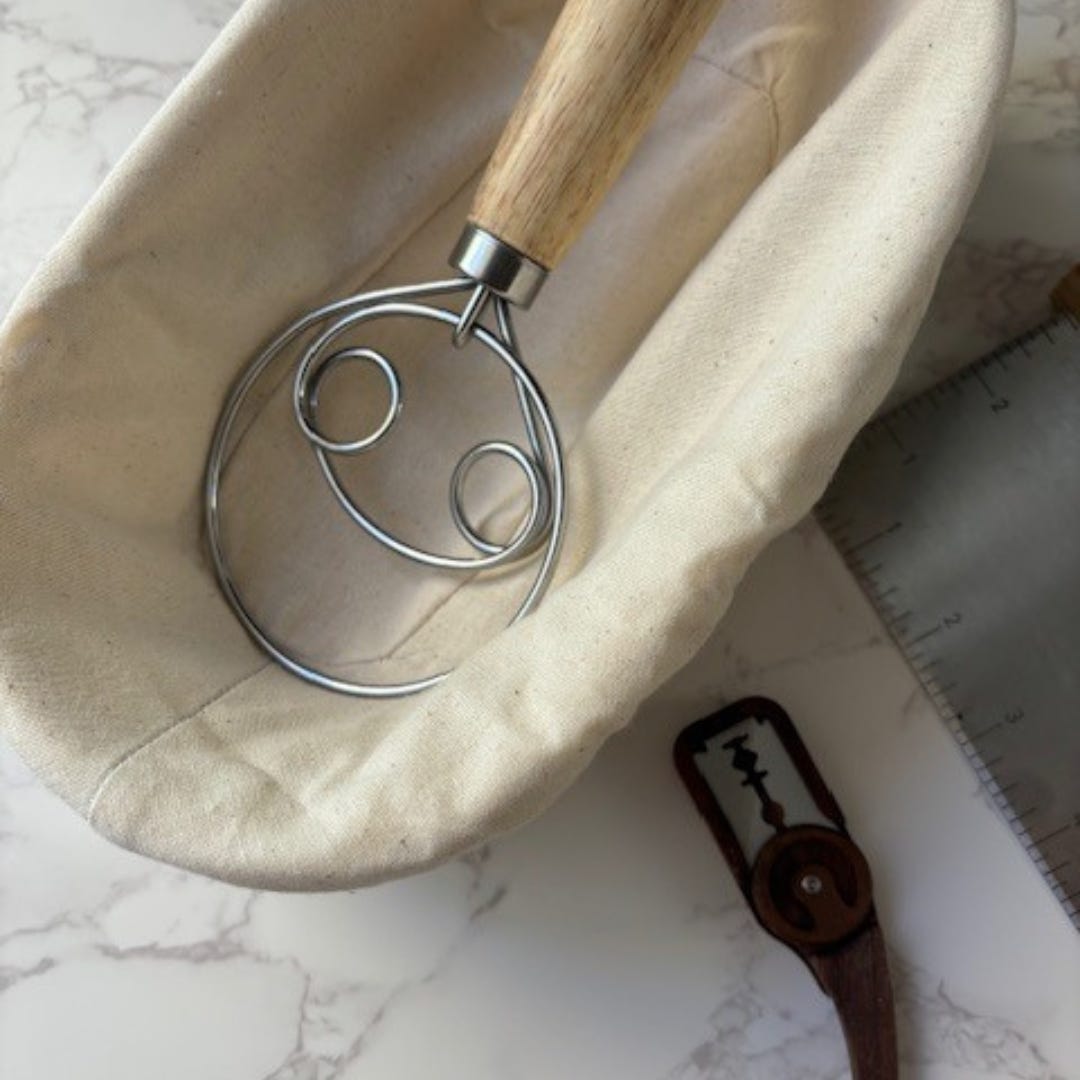
PHASE 1 - MIXING THE DOUGH: this is the initial phase of the sourdough baking process, and during this phase you are turning your active sourdough starter into dough by adding more flour, water and salt. TOOLS NEEDED for this phase:
-A large mixing bowl: I prefer to use glass or ceramic
-A dough whisk or a large spoon/spatula: I think the dough whisk is worth it!
-A bowl cover or tea towel: to cover your dough between stretch and folds and during bulk fermentation (phase 2).
-A kitchen scale: a scale will ensure that you are accurately measuring your starter feedings and your dough.
-A bowl scraper: this is optional for this phase, but it can be nice to use for stretch and folding your dough if you don’t want to use your hands.
You can find all of these items in my Amazon Store, I have also found some great towels and bowls at local thrift stores.
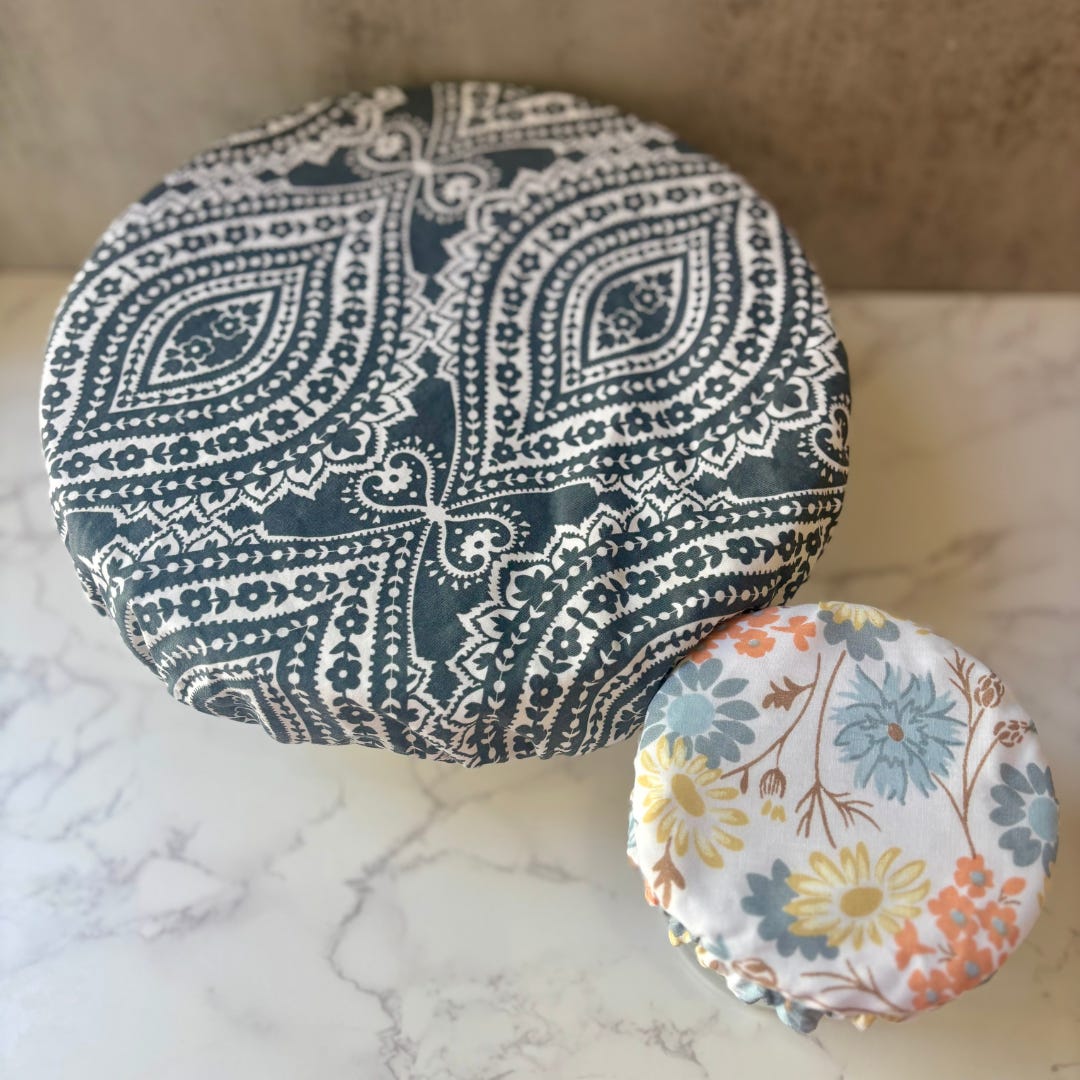
PHASE 2 - BULK FERMENTATION: this phase is when the dough ferments in a large mass after mixing ends and before it’s divided and shaped. You don’t need any additional tools for this phase, but I do recommend the bowl cover/tea towel to cover the dough as it ferments.
I sell the beautiful bowl covers (pictured above) on my website. I absolutely love them!


PHASE 3 - SHAPING: there are two steps in this phase: pre-shaping and final shaping. Essentially you are dividing (if there are multiple loaves) and pre-shaping your dough into its final form.
For this phase I recommend the following tools:
- A bowl scraper: the bowl scraper allows you to easily scrape the dough out of the bowl and onto the counter.
- A bench scraper: a flat, rectangular blade that’s used to divide, split, scoop and transfer your dough from one place to another (from counter to the banneton).
You can find these tools linked in my Amazon Storefront. These tools are very inexpensive and well worth the small fee! If you only want to get one of them, I suggest the bowl scraper - I often use it in place of my bench scraper. They are only a few dollars.
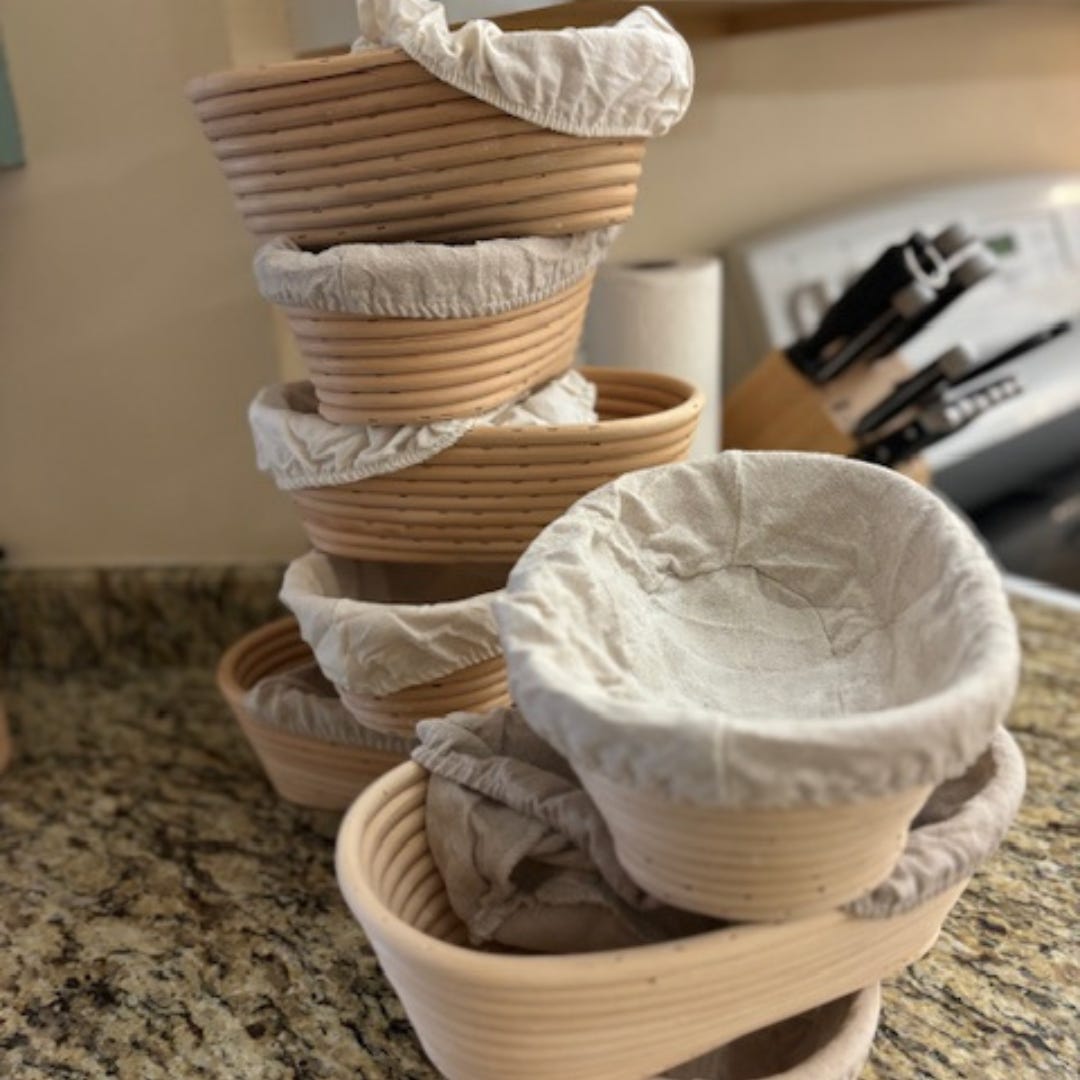
PHASE 4 - COLD PROOFING: during cold proofing you are simply placing your dough in the refrigerator for an extended period, normally over 5 hours and up to 48 hours. This is an optional (but highly recommended) step! And for this phase I recommend:
- A banneton (proofing basket): A banneton is used to hold shaped dough as it rises. They help the dough maintain its shape. Without one, your dough could potentially flatten like a pancake. That being said, they are an investment, so if you want to wait on this one, you can use a stainless-steel bowl or even a wicker basket lined with a tea towel.

PHASE 5 - SCORING: Scoring has two main jobs in the sourdough bread process: 1) it allows for expansion and growth of your dough (preventing it from bursting open) and 2) it determines what your beautiful loaf will look like.
When I first started baking sourdough bread, I had very minimal tools - a mason jar, a Dutch Oven and a kitchen scale were about all I had. I most definitely didn’t have anything for scoring my dough. At the time, I used a sharp kitchen knife, which worked okay, but it wasn’t until I was introduced to a bread lame that the world of scoring came into my life.
You guessed it, a bread lame is the tool I highly recommend for scoring your dough. Bread lames are specifically designed for scoring your dough and will be better than a knife at directing the rise of your bread and where you want it to go.
Like everything else, you can find simple bread lames on Amazon, but my personal favorite lame is made by Wire Monkey - I love their Goose Lame (it’s pictured above). Use this link for a discount. I promise it’s worth every penny.
PHASE 6 - BAKING: The final phase. During this phase you are…you guessed it, baking the dough. For baking, I highly recommend a Dutch Oven and some parchment paper (look for unbleached PFAs free)
And yes, you can bake your loaf without a Dutch Oven by open baking, but if you are willing to invest, a Dutch Oven is worth it. Open baking can be challenging, especially for beginner sourdough bakers.
I currently have two Lodge Dutch Ovens and one Krustic Dutch oven - use this link for 15% off.
Okay, if this feels like too much to invest in right now, I get it so I’m going to leave you my top 5 tools I suggest you invest in if you are serious about making sourdough bread:
1. KITCHEN SCALE - this is a no brainer.
2. STARTER JAR with LID - probably something you already have at home (regular mason jars work great)
3. MIXING BOWL - again, you most likely have something at home
4. DUTCH OVEN or TWO BREAD PANS - trust me
5. TOWELS/BOWL COVERS
Coming next week - Sourdough Peanut Butter Blossom Cookies and Sourdough Strawberry Shortcake. I’m also considering doing my first podcast and would love to hear your thoughts (especially if there is anything specific you want me to discuss).
Have a great weekend everyone! Happy Baking!